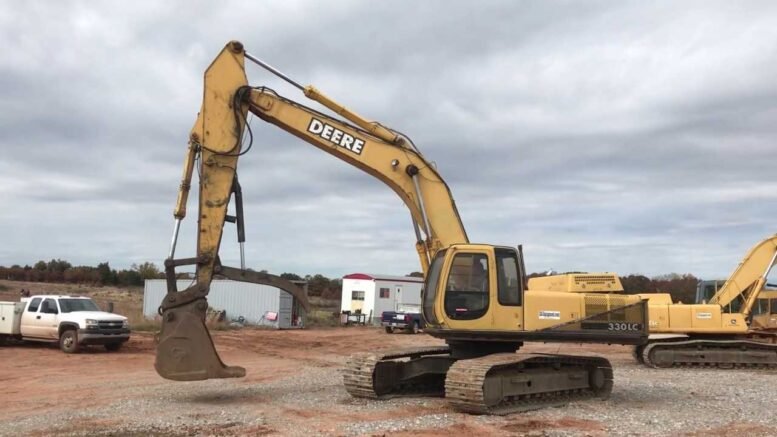
John Deere 330LCR Hydraulic Excavator Operators Manual
(TM 5-3805-281-10)
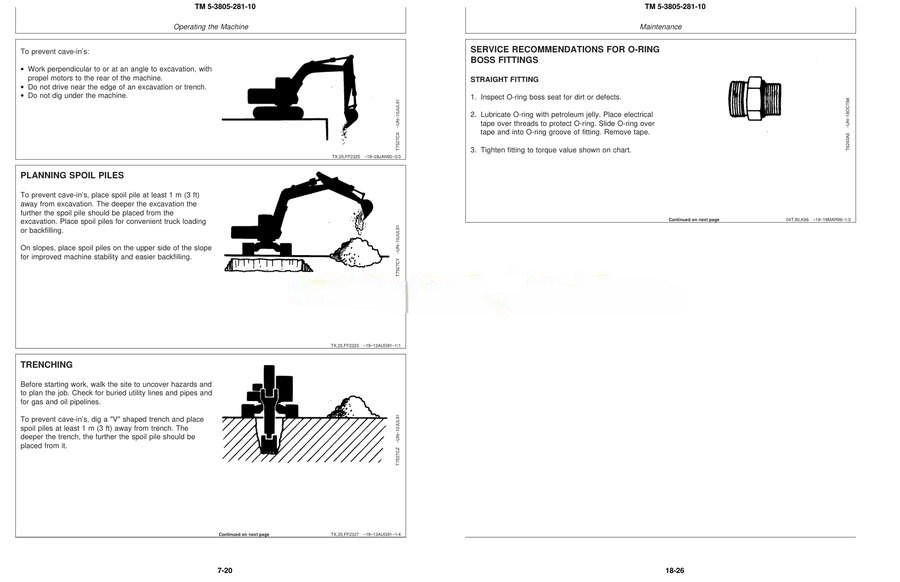
Complete Table of Contents Breakdown:
Section 1: Introduction & Safety
- Safety Messages and Signal Words (DANGER, WARNING, CAUTION, NOTICE)
- Machine Identification (Serial Number Locations, Model Views)
- General Specifications (Operating Weight, Engine Power, Transport Dimensions)
- Component Identification (Major Components: Cab, Undercarriage, Attachments)
- Dimensions and Weights
Section 2: Operation
- Daily Operation Checks (Pre-start, Walk-around Inspection)
- Operator’s Station (Seat Adjustment, Control Console, Monitor Panels, Joystick Functions)
- Starting and Stopping the Engine (Cold/Hot Start Procedures, Shutdown)
- Machine Operation (Travel, Swing, Excavation, Grading)
- Working with Attachments (Quick Coupler Operation, Hydraulic Circuit Selection)
- Machine Transportation (Loading, Tie-down Points)
Section 3: Engine & Electronic Control System
- Engine Specifications (JD Engine Model, Horsepower, RPM)
- Electronic Control Module (ECM) Overview
- Monitor Panel Functions and Diagnostic Codes
- Engine Diagnostics and Parameters
- Throttle Control System
John Deere 330LCR Hydraulic Excavator Operators Manual
Section 4: Hydraulic System
- Hydraulic System Specifications (Pump Type/Flow, Pressure Settings, Tank Capacity)
- Main Hydraulic Pump (Variable Displacement Piston Pump)
- Control Valves (Main Valve, Pilot System)
- Cylinders (Boom, Arm, Bucket, Swing)
- Hydraulic Motors (Swing, Travel)
- Hydraulic Oil Recommendations and Filtration
Section 5: Electrical System
- Wiring Diagrams (Full Schematic)
- Battery Specifications and Care
- Fuse and Relay Panel Layout
- Sensor Locations (Pressure, Position, Temperature)
- Lighting and Accessory Circuits
Section 6: Undercarriage & Swing System
- Undercarriage Specifications (Track Gauge, Shoe Width, Number of Rollers)
- Track Adjustment and Track Chain Wear Limits
- Swing Gearbox and Swing Bearing (Gear Lash, Bearing Play)
- Travel Motors and Brakes
Section 7: Lubrication, Maintenance & Schedules
- Maintenance Interval Charts (Critical Section – Typically in table format):
- Every 10 Hours/Daily: Walk-around inspection, engine oil level, coolant level, hydraulic oil level, air pre-cleaner.
- Every 50 Hours: Lubricate all pins, linkages, and swing bearing.
- Every 250/500 Hours: Change engine oil and filter, change hydraulic oil filters, clean radiator and coolers.
- Every 1000/2000 Hours: Change hydraulic oil, final drive oil, swing gearbox oil, replace air filter elements.
- Fluid Capacities and Recommendations (Engine oil, Hydraulic, Coolant, Gear Oils)
- Grease Points and Specifications
Section 8: Troubleshooting & Diagnostics
- Structured Diagnostic Outlines:
- Engine Will Not Start (Battery/Starter, Fuel, Electrical Faults)
- Engine Power Loss
- Hydraulic System Issues (Slow Operation, Weak Force, Overheating)
- Electrical System Faults (Monitor Errors, Sensor Failures)
- Abnormal Noise or Vibration
- Diagnostic Trouble Code (DTC) List and Clear Procedures
- Performance Testing (Hydraulic Pressure/Flow Tests, Engine RPM Checks)
Section 9: Storage & Special Procedures
- Long-Term Storage Preparation
- Machine Jacking and Lifting Points
- Bleeding the Fuel System
- Priming the Hydraulic System
Section 10: Appendix
- Torque Specifications for Critical Fasteners
- Beta Values (Service Codes) for Advanced Diagnostics
- Conversion Charts
- Service Dealer Contact Information